 Rick Carlton
Replacing your brake pads is one of the most common maintenance tasks for any vehicle owner. However, when you start looking for quotes, you’ll notice a massive range in pricing. Understanding why these costs fluctuate can help you make a more informed decision and ensure your vehicle remains safe on the road.
What Influences Brake Pad Pricing?
Several factors dictate the final price tag of a set of brake pads. It isn’t just about the brand name; it’s about the engineering required for your specific vehicle.
- Vehicle Make and Model: A luxury European sedan or a high-performance sports car often requires specialized pads and electronic wear sensors, which increases the cost. Conversely, mass-produced economy cars benefit from high-volume manufacturing, keeping costs lower.
- Brake Size: Larger vehicles need larger pads. A heavy-duty truck requires more friction material and a larger steel backing plate than a subcompact car, leading to higher material costs.
- Brake Composition: The materials used in the friction puck – whether ceramic, semi-metallic, or organic – significantly impact the price.
The right brake compound has to offer the correct stopping power while matching your vehicle’s weight and heat output to the pad’s thermal capacity. All these factors will impact cost.
Exploring The Different Brake Pad Types
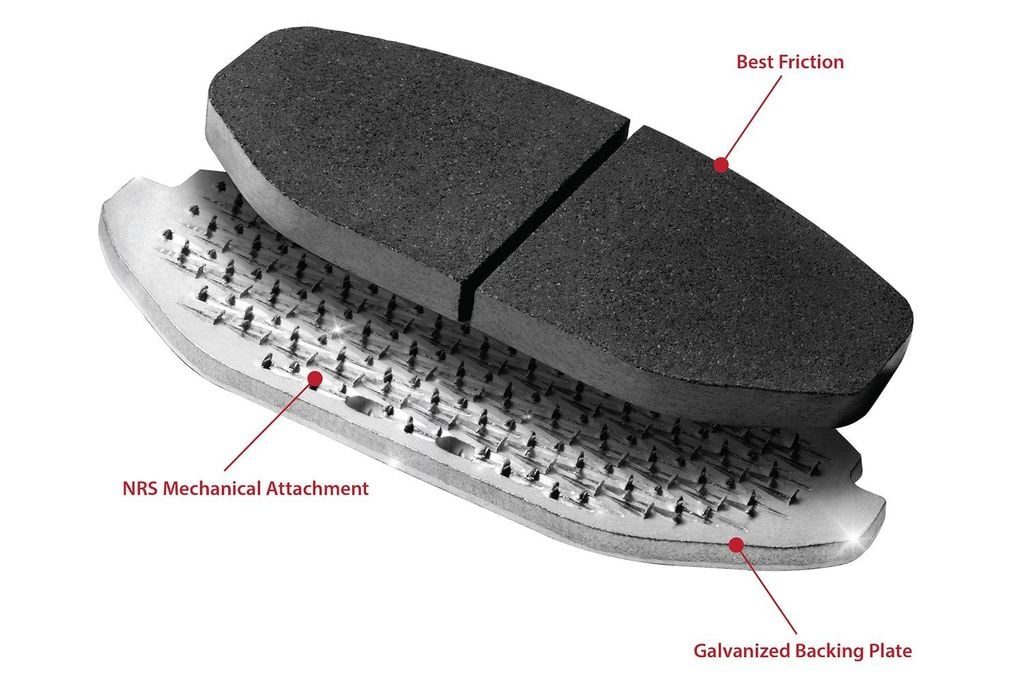
Let’s start with ceramics. Ceramic brake pads are a common choice for modern daily drivers, luxury sedans, and family SUVs. These pads are composed of a dense ceramic material mixed with copper fibers. Their primary appeal lies in their comfort and cleanliness; they are incredibly quiet and produce a light-colored dust that doesn’t stick to wheels like other compounds.
- Ceramic Brake Pad Pros: Extremely quiet operation and very low dust production compared to other types, and highly durable with a long lifespan for standard commuting and city driving.
- Ceramic Brake Pad Cons: Less initial bite when cold (so they are not ideal for extreme cold climates), and they don’t dissipate intense heat as well as semi-metallic brake pads, so they are not well-suited for tow vehicles or heavy vehicles driven on mountain roads.
Next, let’s discuss semi-metallic brake pads. These are the versatile workhorses of the braking world, consisting of anywhere from 30% to 65% metal (typically steel, iron, or copper) blended with graphite lubricants and fillers. These are the preferred choice for sports cars and heavy-duty trucks because the high metal content makes them extremely effective at pulling heat away from the rotors.
- Semi-Metallic Brake Pad Pros: Exceptional cold bite and heat dissipation, making them perfect for performance driving. They also provide a much firmer pedal feel, giving the driver more confidence during hard braking.
- Semi-Metallic Brake Pad Cons: Significantly noisier and produce a dark, heavy dust that can coat wheels quickly.
Lastly, there are organic brake pads, often referred to as Non-Asbestos Organic (NAO), are made from a mixture of fibers and materials such as rubber, glass, carbon, and Kevlar, all bound with high-temperature resin. These pads remain popular because they are very soft and quiet, providing a smooth braking experience.
- Organic Brake Pad Pros: The most affordable option on the market and very gentle on your brake rotors. they also provides a very soft, comfortable engagement that is ideal for small, light vehicles.
- Organic Brake Pad Cons: Prone to brake fade under high temperatures and wear down much faster than ceramic or metallic options.
What Can You Expect To Pay?

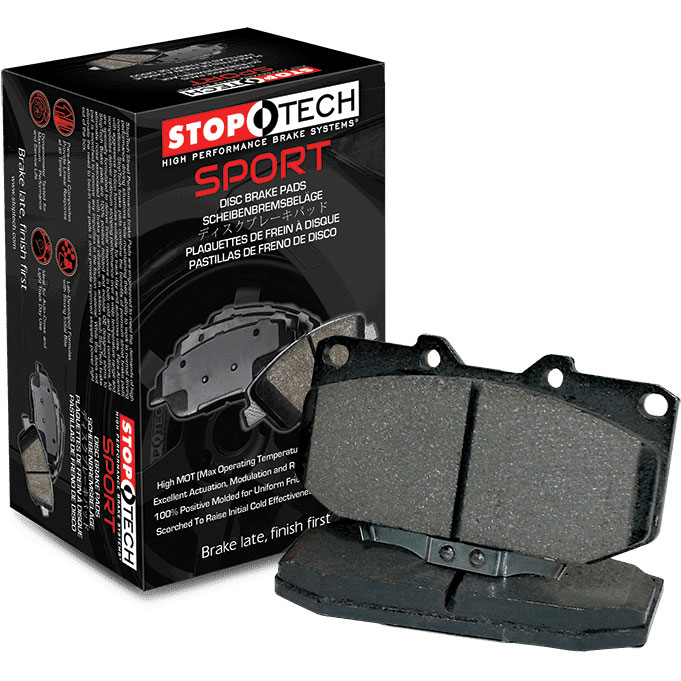
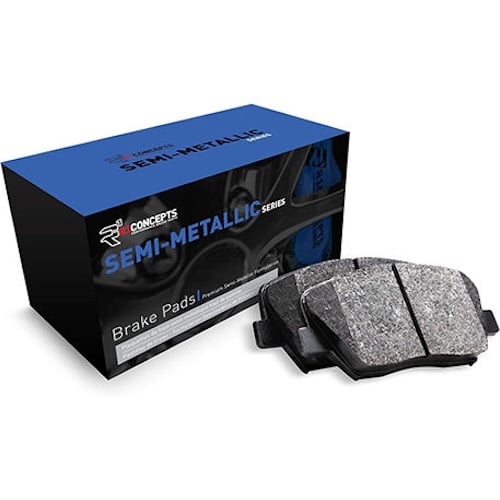
While prices vary based on current market rates and specific sub-models, you can follow the links below to learn the price for high-quality brake pads from a few of our most trusted manufacturers like EBC, Powerstop, and DFC:
Budget/Daily Commuter Cars
- Designed specifically for quiet, smooth daily stops.
- Low-dust formula keeps wheels cleaner for longer.
Powerstop Low Dust Evolution Ceramic Brake Pads:
- Quiet, noise-free braking
- Thermal scorched surface for a faster break-in period.
Sports and Performance Cars
Powerstop Z23 Evolution Sport:
- Carbon-fiber ceramic formula for better stopping power.
- Dual-layer rubberized shims provide better noise insulation.
EBC Yellowstuff Street and Track Brake Pads:
- Great for towing and racing but can also be used for a daily driver
- Work perfectly from cold and can be safely used on the highway
Trucks and SUVs
DFC Ultimate Truck Duty Performance Brake Pads:
- Made to withstand heavy-duty operation, extreme heat, and frequent stopping
- High friction formulation offers consist friction stability at high operating temperature ranges
EBC Extra Duty Red Pads for Light Truck, Jeep & SUV:
- The brake material is fade-free and can operate effectively across a wide range of temperatures.
- Features brake-in coating to scrub the rotors clean upon installation.
How To Save On Your Next Set Of Brake Pads
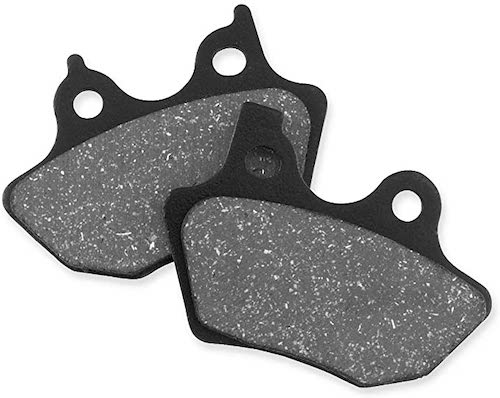
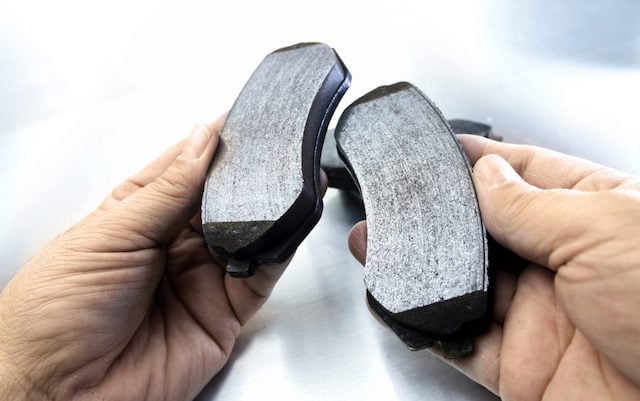
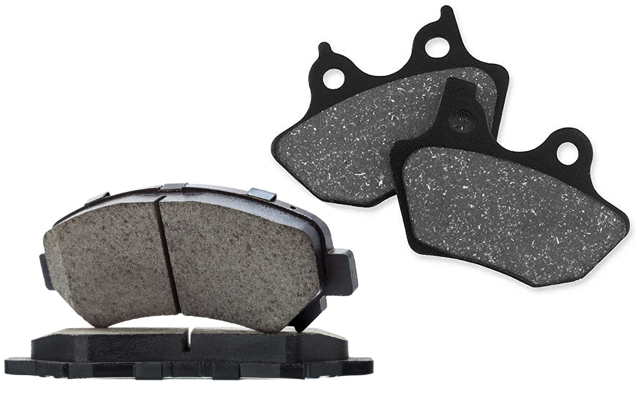
The secret to saving money on brake maintenance is to separate the cost of parts from the cost of labor – even if you’re not planning to install them yourself. Dealerships and shops often apply a significant markup to brake pads. By ordering your parts online through BuyBrakes.com, you can get premium brands without the dealer markup. Then, have your local dealership or trusted mechanic install them.
If you are mechanically inclined, you can save even more by installing the brake pads yourself. It’s a straightforward job; all you need is a trusted tutorial and about an hour per axle.
Choose BuyBrakes.com For Affordable High-Quality Brake Pads
Whether you are looking for brake pads, brake rotors, or even a big brake kit we have something for every vehicle type and driving requirement. We aim to deliver the best safety, reliability, and performance. That is why we only stock brake components from top brands, and we bring decades of hands-on automotive experience to the table. If you’re unsure which brake upgrade options are right for you, contact our brake experts – we’re happy to help. We offer the best parts at the best prices. Guaranteed.

Add comment